
Home / Solid Wood Flooring
Solid Wood Flooring
A solid floor is one piece of timber from top to bottom. It can be sanded and refinished many times over a lifetime, which is why floors laid a hundred years ago are still in use across London. It also moves with the seasons, which decides where it belongs and where it does not.
We will say this plainly rather than at the bottom of the page: most of the floors we sell are engineered, and for most London jobs that is the right choice. Solid is the better answer in specific situations, and this page is about which ones.
See the range ↓When Solid Is the Right Choice
A period house on timber joists, with no heating underneath. This is what solid wood was made for: a suspended floor with a ventilated void below, where the timber can breathe and the movement has somewhere to go.
When you want the floor to outlive several kitchens. A solid board 20 mm thick can be sanded five or six times. An engineered board with a 4 mm wear layer gets two. If the plan is for this floor to still be here in fifty years, solid is the honest answer.
Matching or extending an existing solid floor. If half the house already has original boards, putting engineered next to them creates a junction that never quite works.
Upstairs. Bedrooms and landings rarely have underfloor heating and rarely have a concrete slab. Solid works there without argument.
When It Is the Wrong Choice
Over underfloor heating. Not a preference, a rule. The heating cycle dries the boards from below and they cup, gap or split. Every kitchen extension we see in South East London now has heating in the floor, and every one of them needs engineered board.
Directly on a concrete slab. Ground floors in London push moisture upward for years, and solid timber has no defence against it. It can be done over a proper membrane and battens, but that raises the floor level and costs more than simply using engineered.
In wide boards. The wider a solid board, the more it moves across its width. Above about 150 mm the seasonal gapping becomes noticeable. Engineered boards can be made twice that wide and stay flat.
| Solid | Engineered | |
|---|---|---|
| Made of | One piece of timber | Real wood wear layer on a cross-grained core |
| Sanding | Five or six times on a 20 mm board | Two on a 4 mm wear layer, three or four on 6 mm |
| Underfloor heating | No | Yes — the only wood floor that should |
| On concrete | Only over a membrane and battens | Glued or floated directly |
| Board width | Up to about 150 mm sensibly | 220 mm and beyond |
| Seasonal movement | Visible gapping in winter | Minimal |
| Best in | Period houses on joists, upstairs, restoration | Almost everything else |
If You Already Have a Solid Floor
Before buying anything, look at what is under the carpet. A great many London houses still have their original pine or oak boards, and if they are sound the cheapest good floor you can have is the one already there. Sanding and refinishing costs a fraction of replacement and keeps something original to the building.
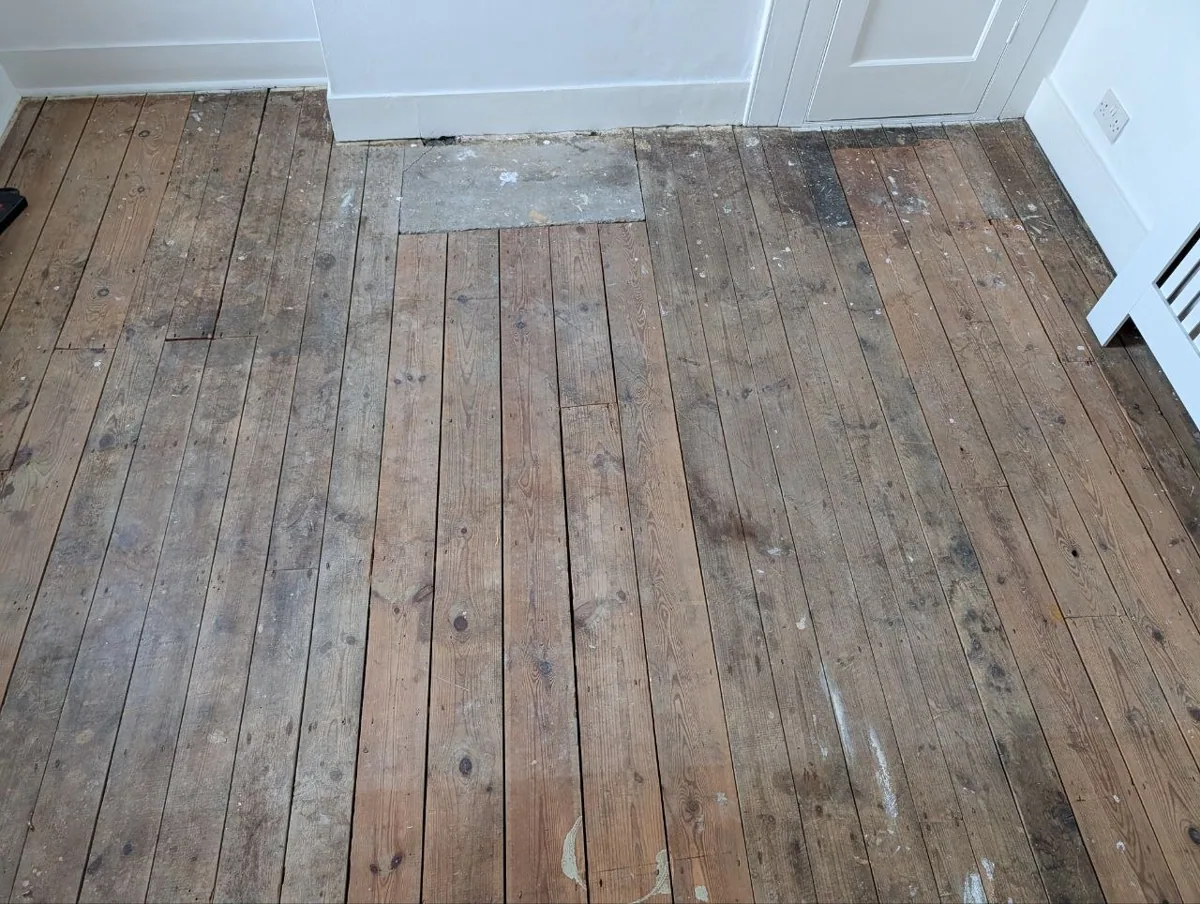
The before-and-after photographs from that job are on our recent work page: four rooms, sanded and refinished in sequence so the family could keep using the house. Our guide to looking after wood floors covers how to judge whether a floor is a candidate.
Solid Wood Floors We Stock
A deliberately short list: solid oak plank and solid oak herringbone. The solid oak Versailles panel at £117.75 per m² sits with the parquet.
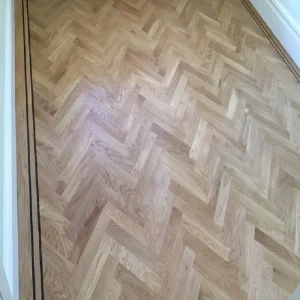
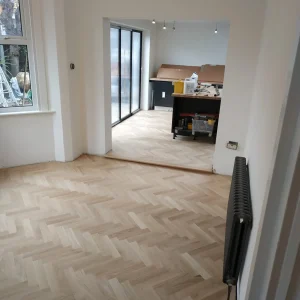

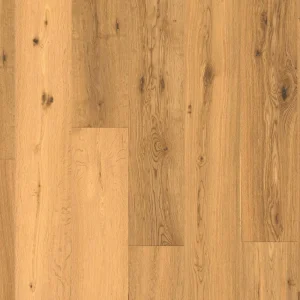
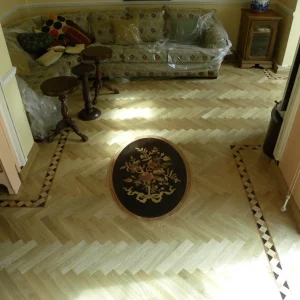
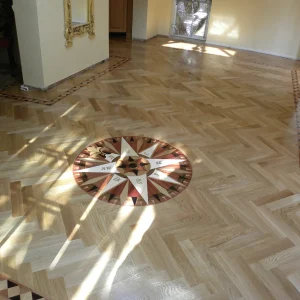
If none of these is right, the wider engineered range runs to 130 floors from £25.99 per m², including herringbone. We can also source solid boards to order — tell us the species, width and finish you are after.
Frequently Asked Questions
Is solid wood better than engineered?
Better at being sanded repeatedly; worse at staying flat. In a period house on joists, solid. Over heating or on a slab, engineered. Anyone who answers this without asking what is under your floor is guessing.
Can solid wood go over underfloor heating?
No. The heat cycle dries the boards from below and they cup or split. Engineered board is the only wood floor that belongs over heating.
How thick should a solid floor be?
18–20 mm is standard for a floor fixed to joists. Thinner boards exist but give you fewer sandings, which removes the main reason for choosing solid in the first place.
Do solid floors gap in winter?
A little, yes, and it is normal. London houses swing from around 60% humidity in summer to 30% with the heating on, and the boards follow. The gaps close again in spring — do not fill them.
Can you fit solid herringbone?
Yes, and we stock two. It is bonded to the subfloor like any parquet, and the base has to be flat and dry. Because the blocks are short, solid herringbone moves less than long solid boards.
Do you supply solid wood to trade?
Yes, and we can source to order beyond what is listed here. Tell us the species, width, thickness and finish.
Not Sure Whether You Need Solid?
Tell us what is under your existing floor and whether there is heating in it, and we will tell you which of the two makes sense — including when the answer is to keep the floor you already have.
Get a Free Quote Order Free Samples