Home / Commercial Wood Flooring
Commercial Wood Flooring
A floor in a shop, an office or a restaurant takes in a week the traffic a hallway at home takes in a year. The specification that matters is not the one on the brochure cover — it is the thickness of the oak above the tongue, and how the surface was finished.
Those two numbers decide whether the floor can be sanded back in year eight or has to be lifted and skipped. We hold 134 floors and can tell you the wear layer on every one, supplied on their own or supplied and fitted by our own fitters across London.
See the range ↓Wear Layer: The Number That Decides Everything
The wear layer is the solid oak above the plywood core, and it is all you have to sand. A full refinish takes roughly a millimetre. So a 2–3 mm floor gives you one sanding, perhaps two if the operator is careful; a 3–4 mm floor gives you two or three; a 4–6 mm floor gives you three or four and will outlive the lease.
| Herringbone | Chevron | |
|---|---|---|
| Block shape | Plain rectangle, cut square | Cut at an angle at both ends |
| How it meets | End to side, stepped | Point to point, continuous V |
| Feel | Traditional, informal, forgiving | Formal, directional, more modern |
| Waste | 10–15% | More — the angled cuts throw away more |
| Cost | Higher than plank | Highest of the three |
| Best in | Almost any room; the safe choice | Long rooms and hallways, where the V has somewhere to go |
Of our range, 10 floors carry a 4–6 mm wear layer, 78 carry 3–4 mm and 32 carry 2–3 mm. For a commercial fit we would point you at the 3–4 mm group first: it is the sensible balance between cost and lifespan, and it is where most of the range sits.
Oiled or Lacquered for a Commercial Floor
This is the decision people get wrong most often, and it runs opposite to the domestic answer. Lacquer is a film sitting on top of the wood. It resists scuffing well, but when it does wear through you cannot patch it — a worn doorway means sanding and recoating the whole floor, which means closing the room.
Oil soaks into the timber instead, so a worn patch can be cleaned and re-oiled on its own, overnight, in the area that needs it. For a restaurant or a shop that cannot shut for three days, that is the difference between maintenance and a refit. We stock 82 oiled floors against 48 lacquered.
Grade and Texture: Hiding the Traffic
A commercial floor will get marked. The question is whether the marks read as damage or as character, and grade decides it. Rustic grade has knots, colour variation and natural movement already in it, so a scuff joins a busy surface rather than interrupting a clean one. We hold 67 rustic floors.
Texture does the same job. Brushing scours out the soft grain so the surface is slightly uneven, which breaks up reflected light and hides fine scratching remarkably well. 102 of our 134 floors are brushed. A smooth, pale, select-grade floor in a busy entrance will look tired in a year; a brushed rustic oak in the same spot looks lived in.
Darker colours are the other trap. A dark stain over pale oak shows every deep scratch as a bright line, which in a commercial setting adds up fast.
Fire, Slip and Building Regulations
Wood flooring in a commercial building sits under rules that do not apply at home, and we would rather say plainly what we can and cannot answer. Reaction-to-fire classification and slip resistance are properties of the specific product and its finish, and they come from the manufacturer’s declaration of performance, not from us.
What we will do is get that documentation for any floor you are considering, before you commit, so your architect or building control officer has the actual certificate rather than our word for it. If a floor cannot meet the specification for your use class, we will tell you that instead of selling it to you.
For an escape route, a stairwell or a space with a high occupancy figure, the classification is not a formality. Ask us early and we will chase the paperwork while you are still choosing.
Shop Floors Suited to Commercial Use
Floors with a 3–4 mm or thicker wear layer, from £22.00 per m² excluding VAT. Trade pricing on volume — ask for a quote with your areas.
Not sure about the shade? Order up to three samples free of charge and see them in your own light, against your own walls, before you decide. Open any floor and click “Add to Sample Box”.
Request free samplesShowing 1–48 of 88 results
-
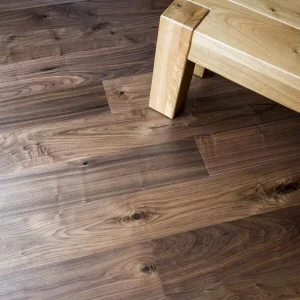
American Black Walnut – Engineered Walnut Plank Flooring
Price on request Request price -
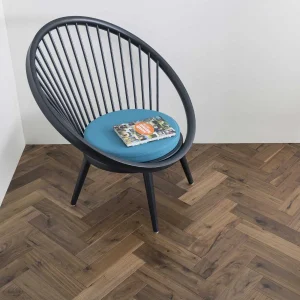
American Black Walnut Herringbone – Engineered Walnut Herringbone Parquet Flooring
Price on request Request price -
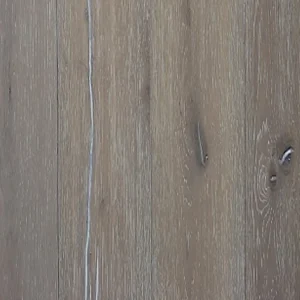
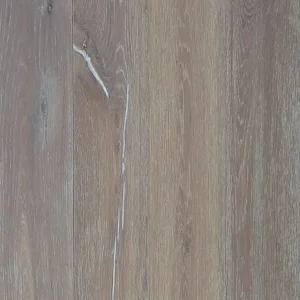
Antique Smoked – Engineered Oak Plank Flooring
£59.99 / m² ex. VAT Add to cart -
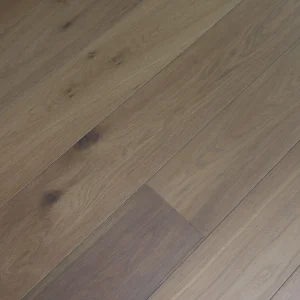
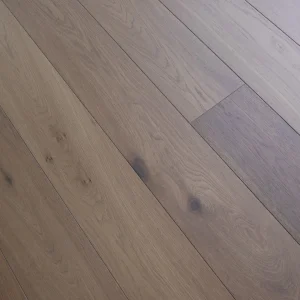
Baked Grey – Engineered Oak Plank Flooring
£32.99 / m² ex. VAT Add to cart -
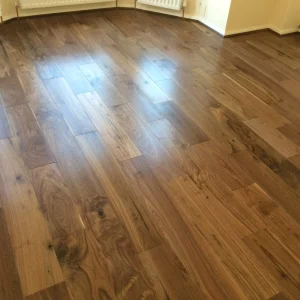
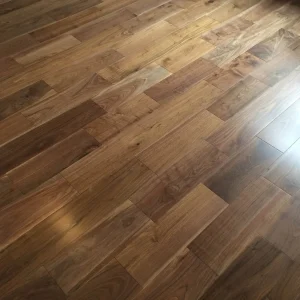
Black American Walnut – Engineered Walnut Plank Flooring
£83.99 / m² ex. VAT Add to cart -
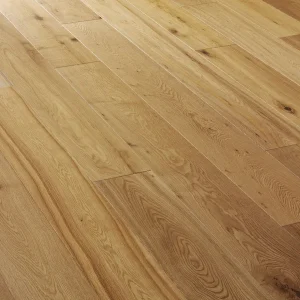
Brushed Hardwax Oiled Oak – Engineered Oak Plank Flooring
Price on request Request price -
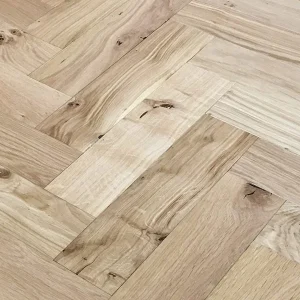
Brushed Oak Herringbone – Engineered Oak Herringbone Parquet Flooring
Price on request Request price -
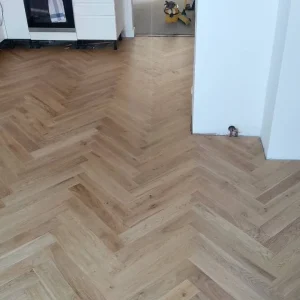
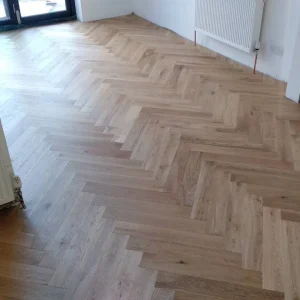
Classic Block – Engineered Oak Herringbone Parquet Flooring
£45.26 / m² ex. VAT Add to cart -
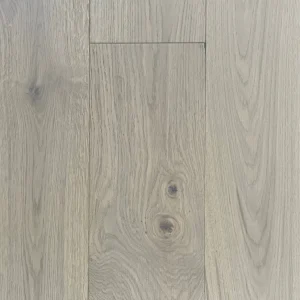
Cool Grey – Engineered Oak Plank Flooring
£49.13 / m² ex. VAT Add to cart -

Cotton’s Wharf – Engineered Oak Plank Flooring
£47.75 / m² ex. VAT Add to cart -
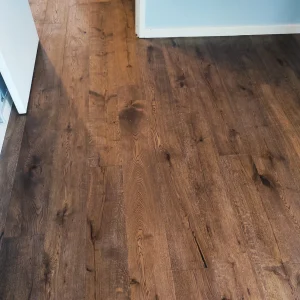
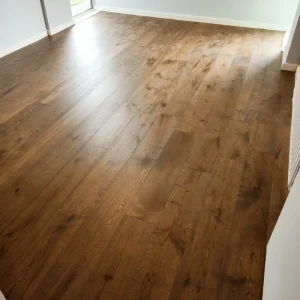
Cringle Dock – Engineered Oak Plank Flooring
£49.49 / m² ex. VAT Add to cart -
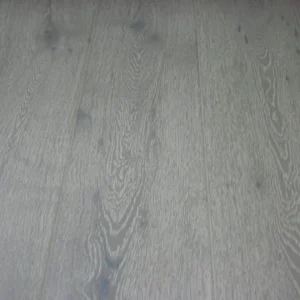
Debden Wharf – Engineered Oak Plank Flooring
£49.49 / m² ex. VAT Add to cart -
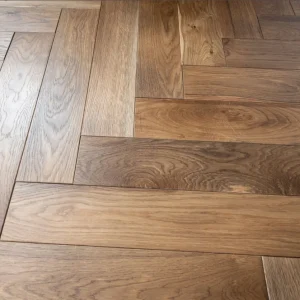
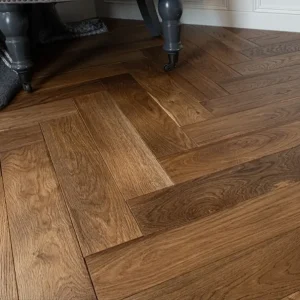
Deep Smoked – Engineered Oak Herringbone Parquet Flooring
£52.49 / m² ex. VAT Add to cart -
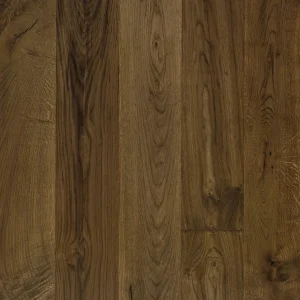
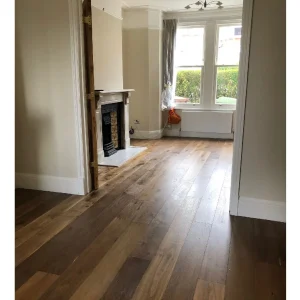
Deep Smoked – Engineered Oak Plank Flooring
£47.99 / m² ex. VAT Add to cart -
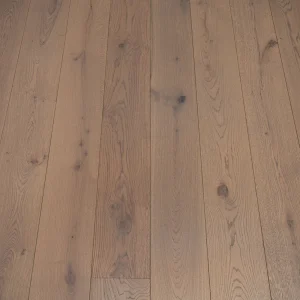
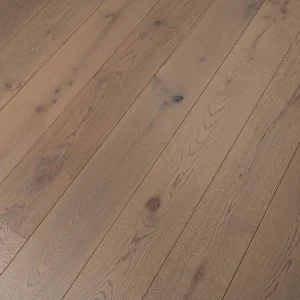
Dove Grey – Engineered Oak Plank Flooring
£42.99 / m² ex. VAT Add to cart -
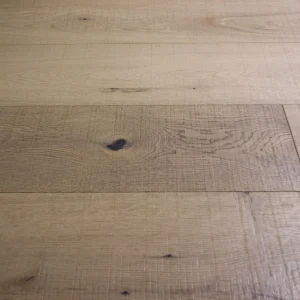
Falcon Draw Dock – Engineered Oak Plank Flooring
£53.90 / m² ex. VAT Add to cart -
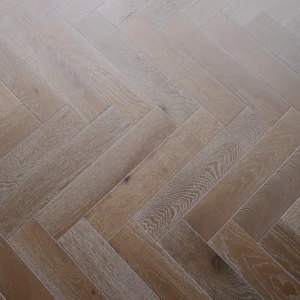
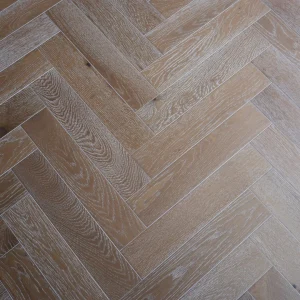
Frosted Smoke – Engineered Oak Herringbone Parquet Flooring
£37.49 / m² ex. VAT Add to cart -
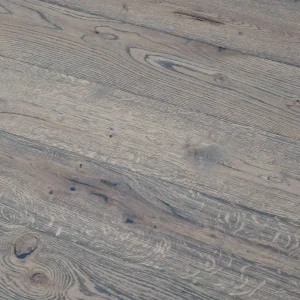
Frozen Umber – Engineered Oak Plank Flooring
Price on request Request price -
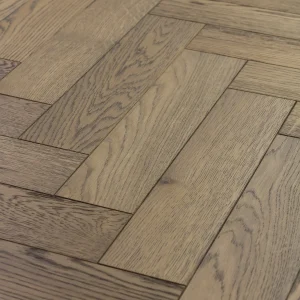
Frozen Umber Herringbone – Engineered Oak Herringbone Parquet Flooring
Price on request Request price -
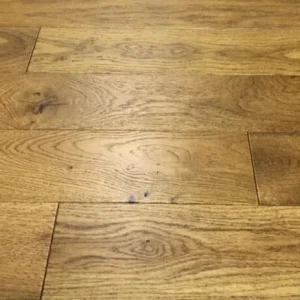
Golden Grain – Engineered Oak Plank Flooring
£37.49 / m² ex. VAT Add to cart -
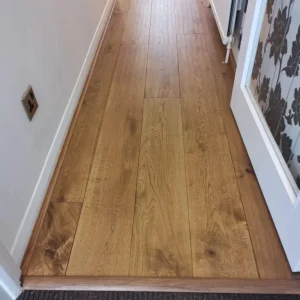
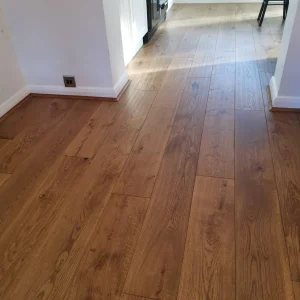
Golden Handscraped – Engineered Oak Plank Flooring
£47.99 / m² ex. VAT Add to cart -
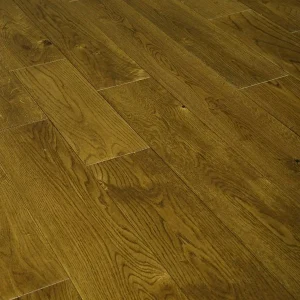
Golden Stained Oak – Engineered Oak Plank Flooring
Price on request Request price -
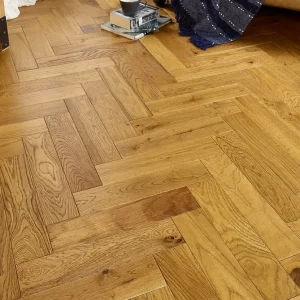
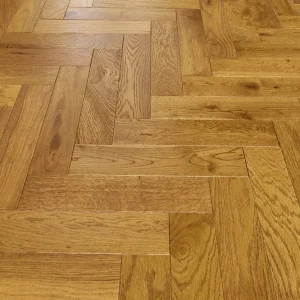
Golden Tone – Engineered Oak Herringbone Parquet Flooring
£47.99 / m² ex. VAT Add to cart -
Sale!
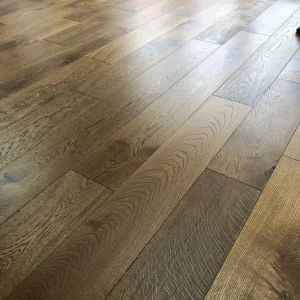
Golden Wide – Engineered Oak Plank Flooring
Original price was: £42.75.£39.20Current price is: £39.20. / m² ex. VAT Add to cart -
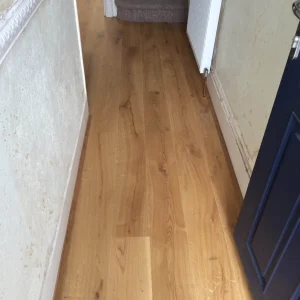
Grand Wide – Engineered Oak Plank Flooring
£59.93 / m² ex. VAT Add to cart -
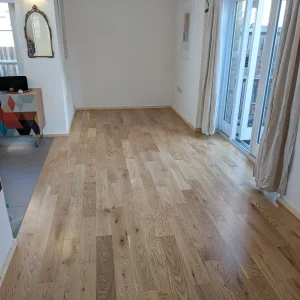
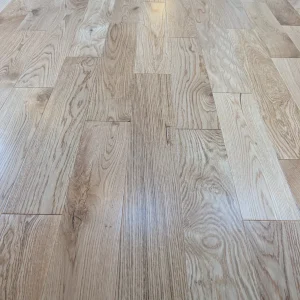
Griffins Wharf – Engineered Oak Plank Flooring
£38.99 / m² ex. VAT Add to cart -
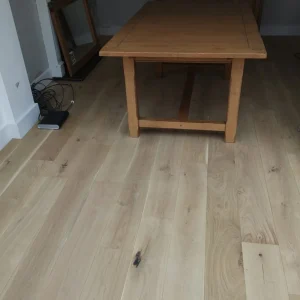
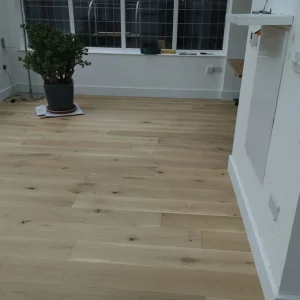
Invisible Light – Engineered Oak Plank Flooring
£47.99 / m² ex. VAT Add to cart -
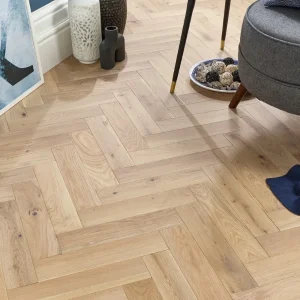
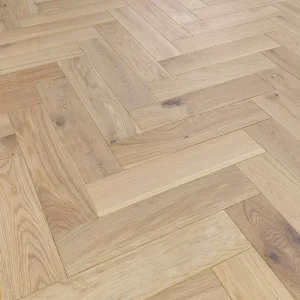
Invisible Oiled – Engineered Oak Herringbone Parquet Flooring
£47.99 / m² ex. VAT Add to cart -
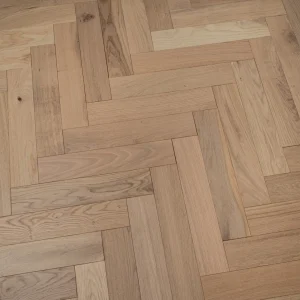
Invisible Soft – Engineered Oak Herringbone Parquet Flooring
£37.49 / m² ex. VAT Add to cart -
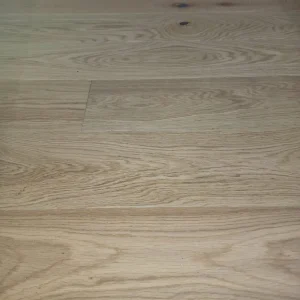
Lambeth Pier – Engineered Oak Plank Flooring
£44.93 / m² ex. VAT Add to cart -
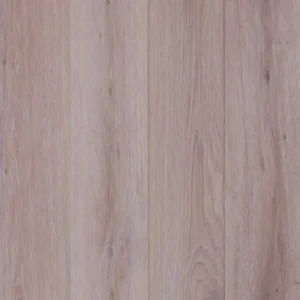
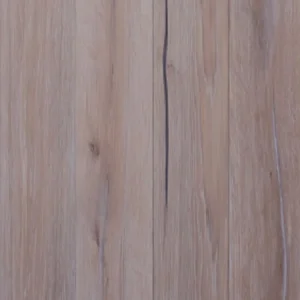
Limed Distressed – Engineered Oak Plank Flooring
£59.99 / m² ex. VAT Add to cart -
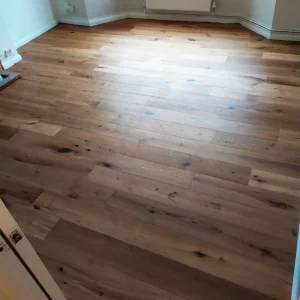
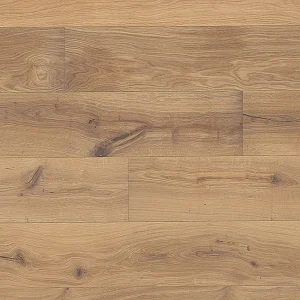
Lion Oak Wharf – Engineered Oak Plank Flooring
£40.32 / m² ex. VAT Add to cart -
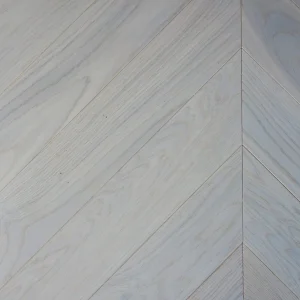
Misty Grey Oak Chevron – Engineered Oak Chevron Parquet Flooring
Price on request Request price -
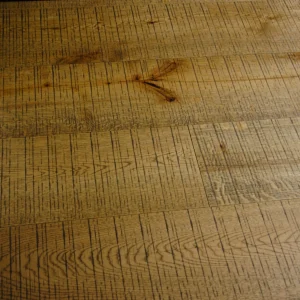
Mortlake Brewery – Engineered Oak Plank Flooring
£53.90 / m² ex. VAT Add to cart -
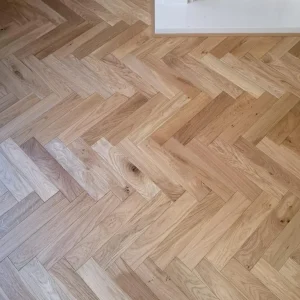
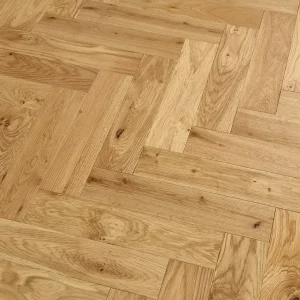
Natural Balance – Engineered Oak Herringbone Parquet Flooring
£47.99 / m² ex. VAT Add to cart -
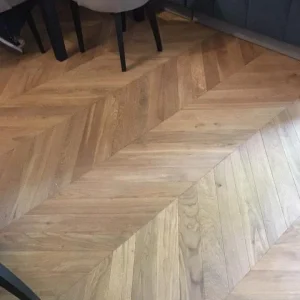
Natural Oak Chevron – Engineered Oak Chevron Parquet Flooring
Price on request Request price -
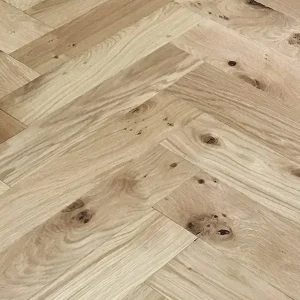
Natural Oak Herringbone – Engineered Oak Herringbone Parquet Flooring
Price on request Request price -
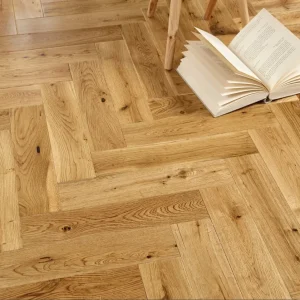
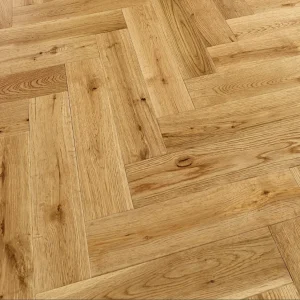
Natural Silk – Engineered Oak Herringbone Parquet Flooring
£47.99 / m² ex. VAT Add to cart -
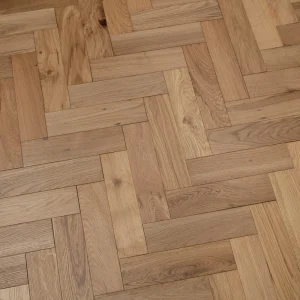
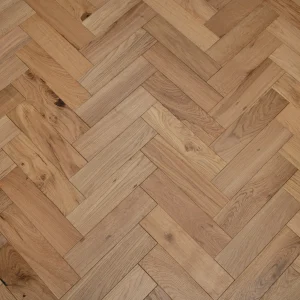
Natural Soft – Engineered Oak Herringbone Parquet Flooring
£40.49 / m² ex. VAT Add to cart -
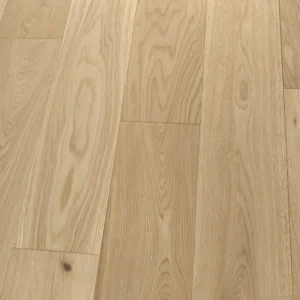
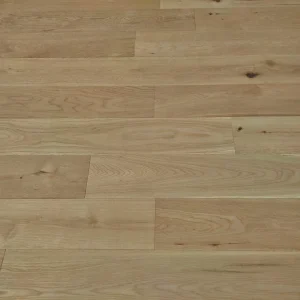
Natural Touch – Engineered Oak Plank Flooring
£36.75 / m² ex. VAT Add to cart -
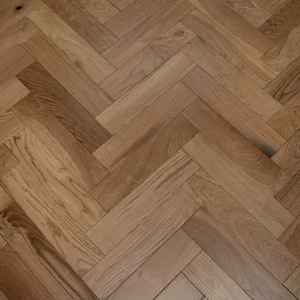
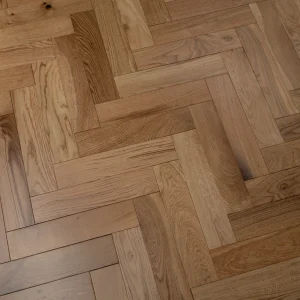
Natural Vibrant – Engineered Oak Herringbone Parquet Flooring
£44.99 / m² ex. VAT Add to cart -
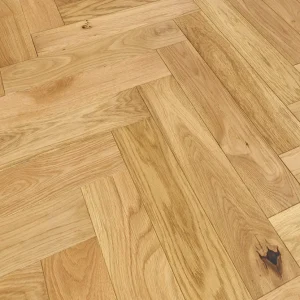
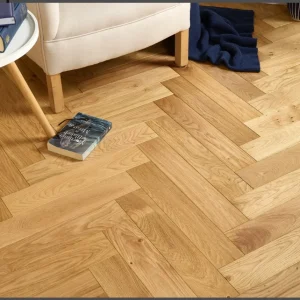
Natural Warm – Engineered Oak Herringbone Parquet Flooring
£52.49 / m² ex. VAT Add to cart -
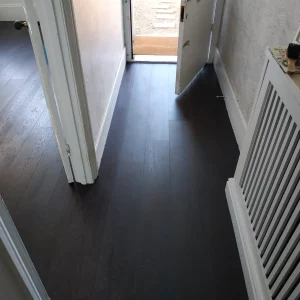

Old Bull Stairs – Engineered Oak Plank Flooring
£47.75 / m² ex. VAT Add to cart -
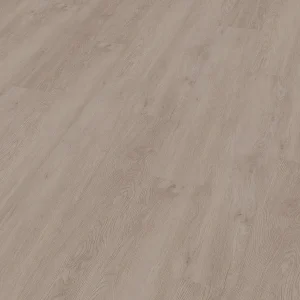
Old Swan Wharf – Engineered Oak Plank Flooring
£48.71 / m² ex. VAT Add to cart -
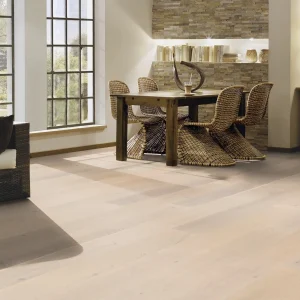
Oyster Cream – Engineered Oak Plank Flooring
£47.75 / m² ex. VAT Add to cart -
 Sale!
Sale!
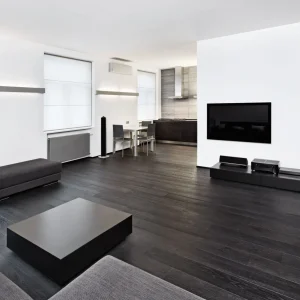
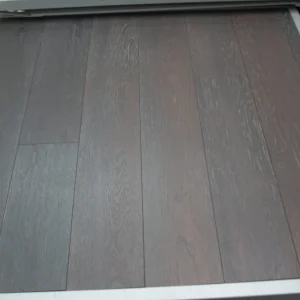
Plumb Slate – Engineered Oak Plank Flooring
Original price was: £36.49.£22.00Current price is: £22.00. / m² ex. VAT Add to cart -
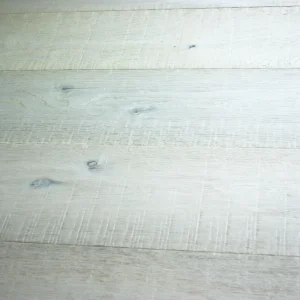
Price’s Candles – Engineered Oak Plank Flooring
£53.90 / m² ex. VAT Add to cart -
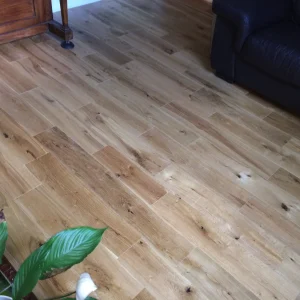
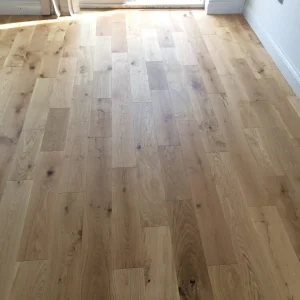
Pure Oak – Engineered Oak Plank Flooring
£44.01 / m² ex. VAT Add to cart
Commercial Work We Have Done
Oak through a Beckenham dental practice, specified oiled so single rooms can be refreshed out of hours. Wide rustic oak in a Crystal Palace cafe, brushed to hide the traffic in front of the counter.
More of these, with photographs, are on our recent work page.
Frequently Asked Questions
What wear layer do I need for a commercial floor?
3–4 mm as a minimum, which is where 78 of our floors sit. That gives two or three full refinishes. Below 3 mm you are committing to replacement rather than maintenance, which is usually the more expensive route over ten years.
Can you supply fire and slip certification?
We obtain the manufacturer’s declaration of performance for any floor you are specifying, before you order. We do not test or certify floors ourselves, and we will not guess at a classification — your building control officer needs the document.
Is solid wood better than engineered for commercial use?
No, and usually it is worse. Solid boards move more with changes in humidity, and a commercial space with heating, air conditioning and doors opening all day is a harder environment than a house. Engineered construction is dimensionally stable, which is why 131 of our 134 floors are engineered.
How long will a commercial wood floor last?
With a 3–4 mm wear layer, sensible matting at entrances and refinishing when it is due rather than when it is desperate, fifteen to twenty-five years is realistic. The failures we are called to see are almost always floors that were never maintained, not floors that wore out.
Do you offer trade or contract pricing?
Yes. Send us the areas and the rooms and we will quote on volume. For a multi-room fit the saving against the list price is usually worth the phone call.
Can the floor go over underfloor heating in an office?
On 64 of our floors, yes — those are the ones rated for it. The constraint is the same as at home: the surface temperature must stay at or below 27 °C, and the screed must be commissioned properly before the floor is laid.
What Our Customers Say
★★★★★
“We had some herringbone flooring fitted recently. It was a great experience from start to finish and we couldn't be more happy with the result. Ruslan is a…”
★★★★★
“Beautiful job, I’m so pleased. Ruslan is very knowledgable, flagged any potential issues early and advised me on what I could preserve from the existing f…”
★★★★★
“I went to visit Wood4Floors to see some samples, and had a super helpful man show me some things and gave me a few full sized samples of herringbone flooring.…”
How do we start a commercial enquiry?
Send the floor areas, the use of each space and your programme dates, and we will come back with a quote, lead times and the certification you need. Samples are free.
Get a Free Quote Order Free Samples